Aluminium extruded profiles
for every application
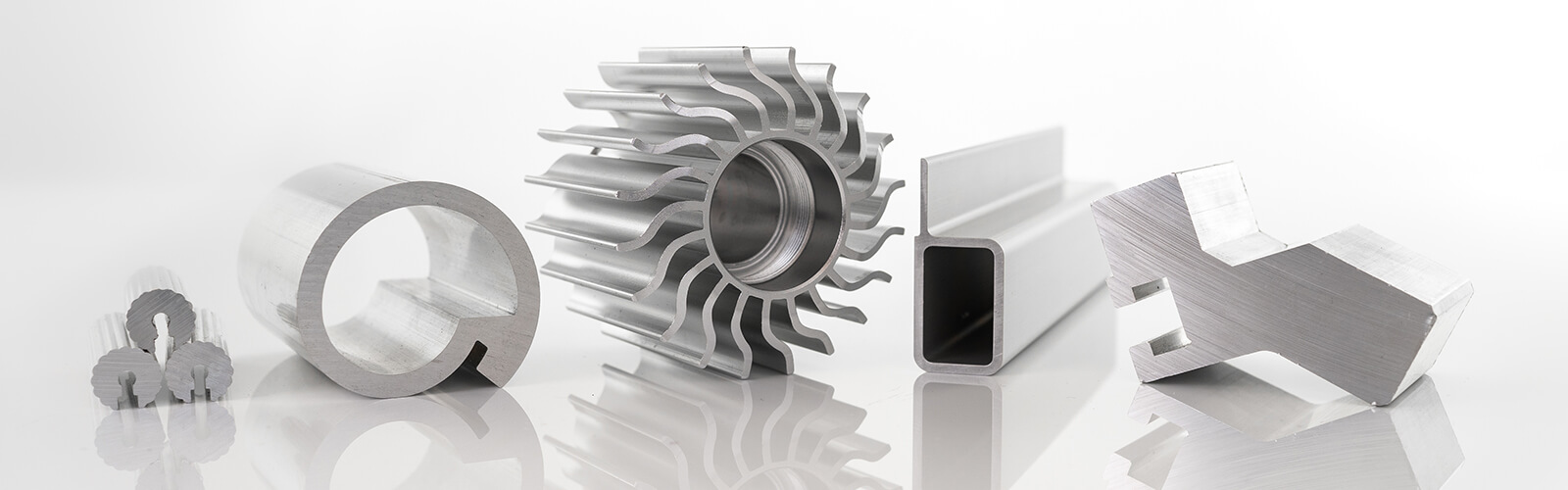
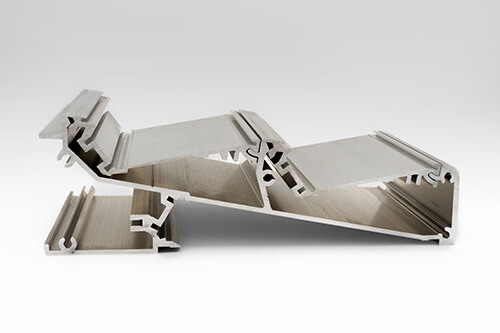
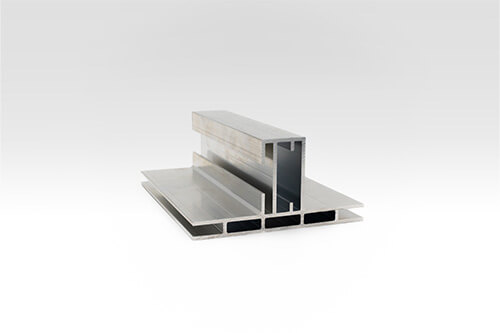
When it comes to manufacturing custom-made aluminium extruded profiles, we at Iventum GmbH are at your side as an experienced specialist.
Aluminium profiles produced by extrusion are used in a wide range of industries. Our customers include the lighting sector, the defence industry, vehicle construction and mechanical engineering, as well as various other industries.
In accordance with the standards EN 755-9 and DIN EN 12020-2, the aluminium extruded profiles we supply are manufactured with up to eight times higher precision than the extrusion standard. Depending on the profile geometry, the tolerances of our aluminium extruded profiles are as low as +/- 0.02 mm. In addition, innovative technologies allow very thin wall thicknesses of down to 0.6 mm.
With access to state-of-the-art machinery, we as your aluminium profile manufacturer ensure the highest quality for every aluminium extruded profile, regardless of complexity, wall thickness and surface finish.
Advantages of your aluminium extruded profile manufacturer
Sourcing our aluminium extruded profiles in a wide range of aluminium alloys offers you as a customer many advantages. Thanks to our modern machinery, you have a wide range of design options for your extruded profile.
Depending on the profile geometry, profile diameters of up to 600 mm can be produced, for example as hollow profiles with several chambers and a wide variety of wall thicknesses. We also offer machining and surface finishing of your aluminium extruded profile from a single source.
- Fast project handling
- Production of small quantities
- Wide range of aluminium alloys
- Realisation of complex profile geometries

About extrusion
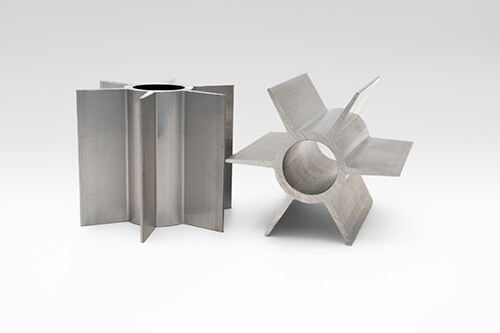
Extrusion is a process for producing profiles with a constant cross-section. Material such as aluminium or brass is pressed under high pressure through a shaping opening. This process allows precise profiles to be produced and is particularly efficient for mass production.
Extrusion is frequently used to manufacture aluminium profiles, tubes and window frames. There are two methods: direct and indirect extrusion. In direct extrusion, the material is pressed directly against the die, whereas in the indirect process the die is moved.
Quality from Iventum
At Iventum, we attach great importance to the quality of our aluminium extruded profiles. Our products are characterised by dimensional accuracy and the required mechanical properties, and they meet the standards EN 573-3 and EN 755-2. From the raw material to the finished profile, we guarantee strict inspection to meet your expectations.

Sustainability at Iventum
We are aware of our responsibility towards the environment and actively promote resource-efficient production processes at our production sites when manufacturing our aluminium extruded profiles. To keep the carbon footprint of our extruded profiles as small as possible, we make sure resources are used efficiently.
Surface finishing at Iventum
Surface finishing of aluminium extruded profiles covers a choice of processes such as anodising, powder coating and mechanical treatments. Anodising protects the aluminium with a hard anodised layer that improves corrosion resistance. Here we offer two standard colours: silver (EV6) and black (C35). Powder coating provides a decorative, durable protective layer in various colours and surface textures, for example matt or gloss.
Various techniques can also be used to create wood-effect finishes. A major advantage over real wood is fire protection. Mechanical pretreatment such as pickling (E6), satin finishing (E2) or polishing (E3) also ensures an attractive appearance. We will be glad to give you personal and detailed advice on your upcoming project.
Applications of aluminium extruded profiles
Thanks to their excellent forming properties, low density and corrosion resistance, aluminium wrought alloys can be used in many ways. As a result, our aluminium extruded profiles are used in a wide variety of applications.
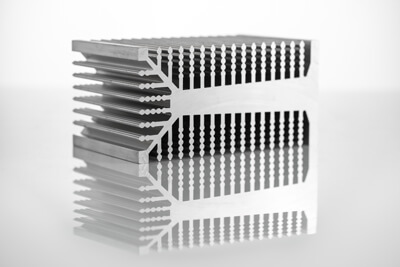
- Heat sinks
- Battery housings for electric vehicles
- Railings
- Pergolas
- Luminaires
- Aerospace
- Mechanical engineering
- Shipbuilding
Custom extruded profiles
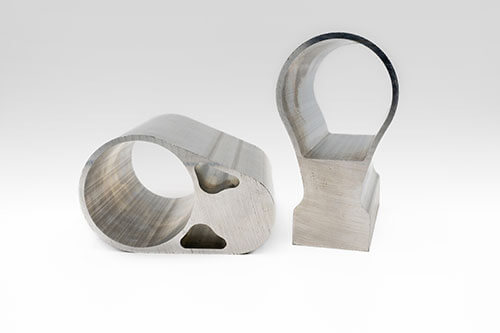
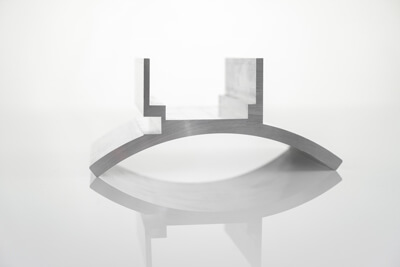
Custom extruded profiles are our hallmark at Iventum. Your extruded profiles are manufactured to your individual requirements and designs to meet your technical and aesthetic specifications. Whether in the construction industry, mechanical engineering or the automotive sector, custom extruded profiles offer flexibility in design and in material, for example aluminium.
By adapting the profile precisely to the respective application, we can optimise functionality, weight and material usage. From small to large production volumes, our custom-made extruded profiles are an ideal solution for your company.
How are extruded profiles produced?
The production of extruded profiles begins with the starting material, which is prepared in the form of cylinders, known as billets. The first step is heating the billet to make the material formable. It is then loaded into an extrusion press. Under high pressure, the heated material is pressed through a die that has the shape of the desired profile. As it passes through, the material takes on the cross-sectional shape of the die, creating the extruded profile. As soon as the profile leaves the die, it is cooled to stabilise its shape. After cooling, the profiles are stretched to correct any distortion and improve their mechanical properties. Finally, the aluminium extruded profiles, for example, are cut to the required length and, depending on the application, further processed or coated to improve the surface quality.
Small batches / prototypes of aluminium extruded profiles
To guarantee smooth series production, it is important to produce a sample for testing in advance. Iventum Profil offers you the option of producing one or more samples for inspection before series production. A major advantage here is that you can check your aluminium extruded profiles in practice for fit and compatibility with other components before series production.
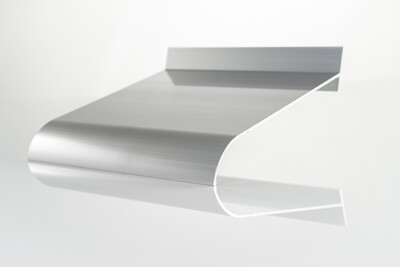
Aluminium alloys
| Alloy | EN AW-6060 | EN AW-6063 | EN AW-6082 | EN AW-2024 | EN AW-7020 | EN AW-7075 |
| DIN EN | AlMgSi0,5 | AlMg0,7Si | AlMgSi1 | AlCu4Mg1 | AlZn4,5Mg1 | AlZnMgCu1,5 |
| Chemical composition | Si 0.3-0.6/ Fe 0.1-0.3/ Cu 0.1/ Mn 0.1/ Mg 0.35-0.6/ Cr 0.05/ Zn 0.15/ Ti 0.1 | Si 0.2-0.6/ Fe 0.35/ Cu 0.1/ Mn 0.1/ Mg 0.45-0.9/ Cr 0.1/ Zn 0.1/ Ti 0.1/ Others 0.05-0.15 | Si 0.7-1.3/ Fe 0.5/ Cu 0.10/ Mn 0.4-1.0/ Mg 0.6-1.2/ Cr 0.25/ Zn 0.2/ Ti 0.1 | Si 0.5/ Fe 0.5/ Cu 3.8-4.9/ Mn 0.3-0.9/ Mg 1.2-1.8/ Cr 0.1/ Zn 0.25/ Ti 0.15 | Si 0.35/ Fe 0.4/ Cu 0.2/ Mn 0.05-0.5/ Mg 1.0-1.4/ 0.1-0.35/ Zn 4.0-5.0/ others 0.15 | Si 0.4/ Fe 0.5/ Cu 1.2-2.0/ Mn 0.3/ Mg 2.1-2.9/ Cr 0.18-0.28/ Zn 5.1-6.1/ Ti 0.2/ others 0.15 |
| Properties |
|
|
|
|
|
|
| Application areas |
|
|
|
|
|
|
Heat treatment |
||||||
| T4 | Solution heat-treated and naturally aged to a substantially stable condition | |||||
| T5 | Quenched from the hot-working temperature and artificially aged | |||||
| T6 | Solution heat-treated and artificially aged | |||||
| T64 | Solution heat-treated and not fully artificially aged, to improve formability | |||||
| T66 | Solution heat-treated and artificially aged, with better mechanical properties than T6 through special process control | |||||
About the extrusion of aluminium extruded profiles
The extrusion of profiles is a forming process in which a cast aluminium billet is pushed through a die by a ram. The die (extrusion tool) is also described as the heart of extrusion, as it has a major influence on the quality of the extruded profile, among other things. To improve the working properties for the forming process, the cast aluminium billets are heated to approx. 400°C before pressing and then cooled again by air or water. The result is high-quality aluminium extruded profiles.
Different extrusion processes
There are various extrusion processes, which are used depending on the material and the requirements. In direct extrusion, the material is pressed against the die, which causes more friction and requires more energy. In indirect extrusion, by contrast, the die moves through the material, which generates less friction and is more energy-efficient. Another process is hydrostatic extrusion, in which the material is pressed through the die by fluid pressure, ideal for sensitive materials. Each process has specific advantages, and the processes are selected and used according to your specific requirements.
Arrange a free consultation
Would you like to carry out your next project with us but still have questions? Then arrange a free consultation today, by phone or via our contact form.
Our experts will get back to you as quickly as possible.